What Is a Funded Account: The Full Operating Model, Costs, and Payout Realities
To understand funded accounts, define the prop firm model, analyze the evaluation process, compare simulated vs live capital, and verify your suitability.

Understanding what is a funded account starts with recognizing it as a performance-based contract where a trader manages capital provided by a firm in exchange for a share of the gains. While the promise of six-figure buying power is accessible to anyone willing to pay an entry fee, the actual capital is often simulated. Traders must rigorously audit drawdown limits and payout terms before committing any registration fee to ensure the model aligns with their strategy.
Defining the Model: What Is a Funded Account?
A funded account is a professional arrangement where a proprietary trading firm provides a trader with a specific amount of nominal capital to trade the markets. Instead of risking their own life savings, the trader operates under the firm’s risk parameters. In return, the trader receives a percentage of the profits they generate, while the firm retains the rest to cover operational costs and risk.
The role of the Prop Firm
A prop firm acts as both a capital provider and a risk manager. These entities are not employers; they do not provide salaries or benefits. Instead, the relationship is contractual. The firm provides the infrastructure (trading platforms and data feeds) and the buying power, while the trader provides the technical skill and execution.
The Profit-Sharing Mechanism
The core incentive is the profit split, which determines how much of the earned gain the trader keeps. While some firms offer lower splits, many industry leaders provide 70% to 90% profit shares. This allows a skilled trader to generate a significant income without the historical personal-capital barrier of $10,000 to $100,000 usually required to make professional trading viable.
How Funded Trading Programs Actually Work
The transition from a retail trader to a funded partner follows a strict meritocratic pipeline. Most firms utilize a filter to ensure only disciplined traders access their capital, which prevents massive losses across their portfolio. You can explore more about how funded trading really works to understand the operational flow.
The Evaluation Phase
Most traders start with an evaluation challenge, a paid assessment where they must prove their consistency. This phase often involves a two-step model: the first step focuses on reaching a specific profit target, and the second step verifies that the results were not a fluke. For example, Topstep’s Trading Combine requires a $3,000 profit target on a $50,000 account, while maintaining a $2,000 loss threshold.
The Funded Stage
Once the evaluation is passed, the trader moves to a funded stage. Some firms, such as Topstep, use an intermediate Express Funded Account before moving a trader to a Live Funded Account. To qualify for the first payout in an Express account, Topstep requires five winning trading days of at least $150. In other models, like OneFunded, payouts may be available on a 14-day cycle, and the first successful payout often triggers a refund of the initial challenge fee.
Risk Limits and Account Termination
Funding is conditional on strict adherence to risk management rules. Failure to follow these results in an immediate account lockout. Common restrictions include:
- Daily loss limits: The maximum amount a trader can lose in a single trading day.
- Maximum drawdown: The total permitted loss from the starting balance or the highest equity peak.
- News trading: Restrictions on opening or closing positions during high-impact economic announcements.
- Overnight trading: Rules prohibiting the holding of positions beyond the daily session close.
- Scalping restrictions: Minimum trade-duration requirements, such as a 15-minute limit.
If a trader breaches these limits, the account is terminated. Some firms offer an account reset for an additional fee, allowing the trader to restart the process.
Real Capital vs. Simulated Environments
There is a critical gap between marketing promises and the contractual reality of most funded accounts. Many traders assume they are trading live broker capital from day one, but the majority of “funded” accounts are actually simulated environments with live market pricing. In these setups, the trader is not interacting with the actual exchange; they are trading virtual funds.
The firm monitors the trader’s performance in the simulation. If the trader is profitable and follows all risk rules, the firm pays out a profit split based on those simulated gains. This model reduces the firm’s risk and eliminates the need for complex regulatory oversight associated with managing live client funds.
A Live Funded Account is different: it involves genuine firm capital and live-market execution. Transitioning to this stage is rare and usually requires a proven track record. For instance, Topstep may review a trader for a Live Funded Account only after they have achieved five payouts in the Express stage.
Comparing Funded Accounts to Personal Trading
Trading a funded account fundamentally changes the risk-reward equation. In a personal account, the trader risks their own equity. In a funded model, the primary risk is the registration fee. This allows a trader to control significantly more buying power than their personal balance would allow.
Consider a 10% gain: on a $1,000 personal account, this is only $100. On a $100,000 funded account, a 10% gain represents $10,000 in nominal profit, which, after a profit split, provides a life-changing income. However, the trade-off is the maximum drawdown limit. While a personal account allows you to ride a drawdown until the balance hits zero, a prop firm will terminate the account long before that happens.
When comparing prop firm drawdown and payouts, it is clear that the psychological pressure shifts from “fear of losing money” to “fear of losing the account.”
| Feature | Personal Account | Funded Account |
|---|---|---|
| Capital Source | Personal Savings | Prop Firm |
| Risk Exposure | Full Balance | Registration Fee |
| Buying Power | Low (Limited) | High (often $100k to $200k or more) |
| Rules | Self-Imposed | Strict/Contractual |
This comparison shows that while funded accounts offer massive scalability, they require a level of discipline that personal trading does not mandate.
The Suitability Audit: Who Should Use This Model?
The funded model is not for every trader. It is designed for those who possess a proven edge but lack the capital to scale. Disciplined traders who prioritize risk management over aggressive gains thrive here. Conversely, gamblers or beginners who treat the evaluation fee as a lottery ticket almost always fail due to the strict daily loss limits.
Before purchasing a program, you must audit the Terms of Service for red flags. Check if the simulated funding environment has hidden consistency rules or if the payout process requires excessive KYC verification that could delay your funds. Be wary of firms that offer “instant funding” without a rigorous evaluation, as these often come with extremely tight drawdown limits that make long-term survival nearly impossible.
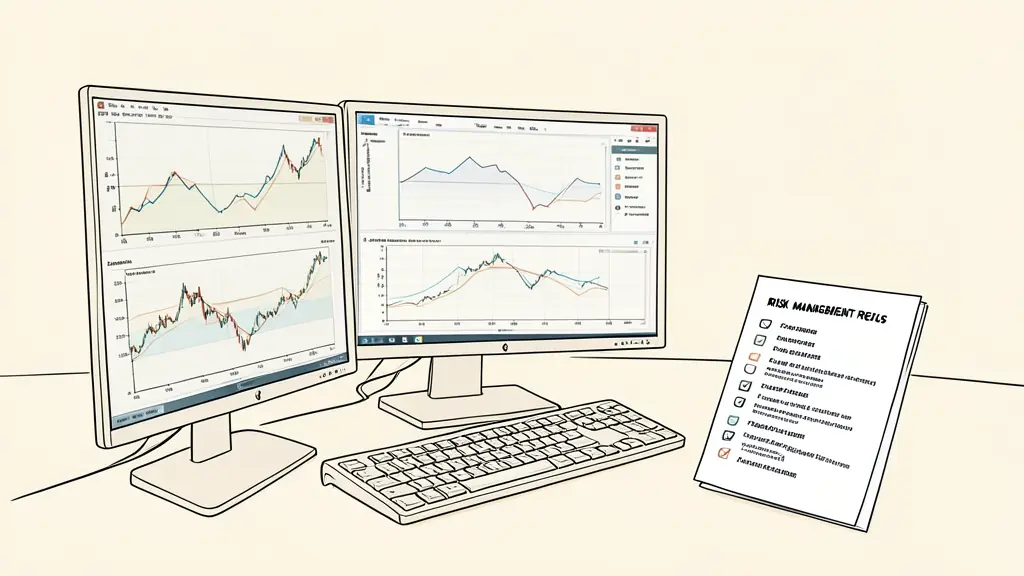
The right choice depends on your psychological profile. If you cannot handle the pressure of a hard stop-loss on your account equity, this model will lead to frustration. If you have a mechanical strategy and can treat the evaluation as a professional audit, the funded route is the most efficient path to financial independence.
The right question is not “how much capital can I get?” but “can I trade within these specific constraints for six months?” The correct reflex is to prioritize the rulebook over the account size.
Risk warning. Trading involves a risk of losing capital. Prop firm challenges are paid and passing them is not guaranteed. This content is for information only and is not investment advice.
Want to go further?
Leave your email and we'll let you know when a new article is out.