Professional Forex Trading Framework Guidelines: Building a Repeatable Edge
Move from random trading to a professional system. Learn the guidelines for risk, execution, and trade selection used by funded traders.

A professional forex trading framework is a comprehensive, rules-based operating system that governs every action a trader takes, from market analysis to trade closure. Unlike a simple strategy, it integrates risk management, psychological anchors, and execution protocols to ensure long-term survival and scalability.
No time to read?
- A framework is an operating system, not just a strategy; it governs risk, psychology, and execution.
- Risk per trade should typically be capped at 1-2% to survive inevitable losing streaks.
- Stop losses are non-negotiable tools for capital preservation, not just trade exit points.
- Consistency is derived from following a repeatable process, not from predicting the next candle.
What Is a Professional Forex Trading Framework?
To achieve consistency in the FX markets, traders must move beyond the search for a “perfect” indicator and instead implement professional forex trading framework guidelines. A framework is not a strategy, nor is it a specific setup. While a strategy defines the “how” (e.g., using price action trading to identify a reversal) and a setup defines the “what” (e.g., a pin bar at a key support level), a framework is the overarching operating system that manages the trader and the risk.
A strategy predicts price movement, but a framework manages the probability of that prediction. It dictates when to trade, how much to risk, and when to walk away. Central to this system are strict risk management rules that prevent a series of losses from becoming a catastrophic account failure. By standardizing every step of the process, the framework transforms trading from a discretionary, emotional activity into a business operation based on statistical expectancy.
The Architecture of Discipline: Why Structure Beats Prediction
The primary reason retail traders fail is not a lack of technical knowledge, but a lack of structural discipline. Many rely exclusively on indicators or patterns, believing that higher accuracy leads to higher profits. In reality, the market is chaotic, and prediction is far less important than process quality. When a trader operates without a framework, every loss feels like a personal failure, leading to emotional bias and random execution.
The distinction between a trading system vs strategy is critical here. A strategy is a tool, but a system is a repeatable process. By implementing a rules-based system, you eliminate the need to “feel” the market. Instead, you rely on objective data. This structure allows for a professional performance audit: if a loss occurs, you can determine if it was a “good loss” (followed all rules) or a “bad loss” (violated the framework). This shift in perspective reduces the psychological impact of drawdowns and prevents the destructive cycle of strategy hopping.
Non-Negotiable Risk Management Guidelines
Professional trading environments prioritize drawdown control over raw returns. The goal is not to make the most money in a single trade, but to ensure the risk of ruin remains zero. This requires a mathematical approach to forex position sizing and a refusal to gamble.
The first pillar is the mandatory stop loss. A stop loss is not a sign of weakness or a lack of confidence; it is a safety net that defines the exact point where your thesis is invalidated. Without it, a single “black swan” event or a central bank announcement can wipe out months of progress. Furthermore, professional frameworks strictly avoid Martingale strategies (doubling down on losing positions), as this exponentially increases the risk of account liquidation.
To maintain longevity, risk per trade is typically capped at 1% to 2% of account equity. This ensures that even a significant losing streak does not trigger a psychological collapse or hit a critical drawdown threshold. When managing drawdown in prop firms, this discipline is the only way to protect the funded account.
| Risk Component | Professional Standard | Rationale |
|---|---|---|
| Risk Per Trade | 0.5% to 2% | Prevents catastrophic account wipeout |
| Min. Risk-Reward (RR) | 1:2 | Ensures profitability even with <50% win rate |
| Stop Loss | Mandatory | Defines the point of invalidation |
| Max Daily Loss | 3% to 5% | Prevents revenge trading and emotional spirals |
The Professional Filter: Trade Selection and Quality Control
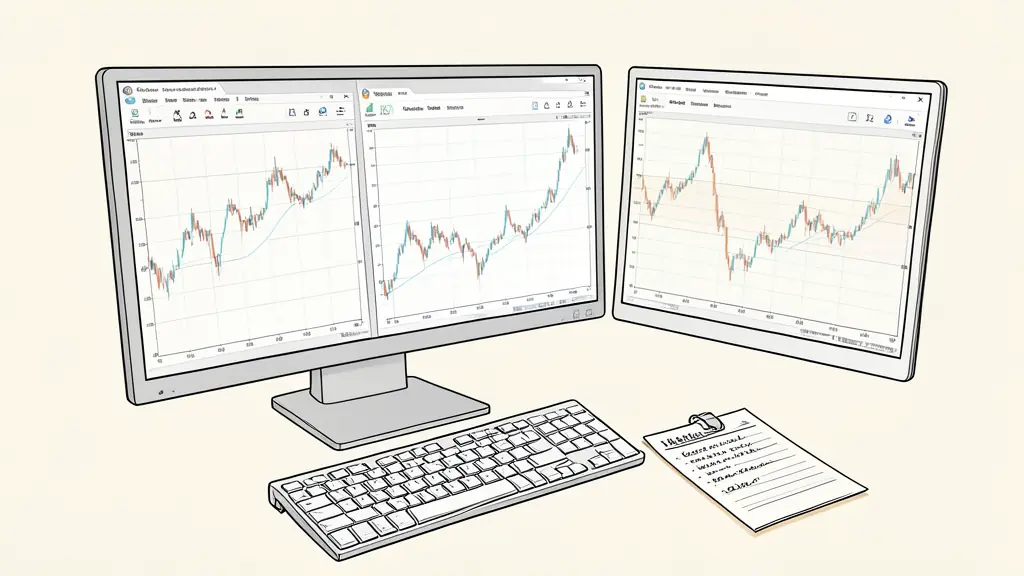
Not every signal is a tradable opportunity. A professional framework employs a trade quality filter to separate high-probability setups from low-quality noise. This process begins with identifying the market regime: is the market trending, ranging, compressing (volatility compression), or breaking out (volatility expansion)?
Using a setup in a ranging market that is designed for a trending market is a primary cause of avoidable losses. Professionals look for confluence, where multiple independent factors align to increase the probability of success. This might include price action trading (higher highs/lower lows), liquidity zones where banks like Deutsche Bank or Barclays are likely to operate, and alignment with higher timeframe trends.
A high-probability setup must pass the following checklist before execution:
* Market Regime Alignment: Does the current volatility and trend match the strategy?
* Liquidity Confirmation: Is the trade occurring at a key support/resistance or supply/demand zone?
* Confluence Check: Are there at least three independent reasons to enter (e.g., trend, value area, candlestick pattern)?
* RR Validation: Is the distance to the target at least double the distance to the stop loss?
* External Risk Check: Are there high-impact economic news events or central bank releases imminent?
If any of these criteria are not met, the setup is ignored, regardless of how “perfect” the chart looks.
Execution Logic: Entry, Exit, and Position Sizing
Execution is where the framework meets the market. To maintain funded trader discipline, the execution must be mechanical. The process is broken down into three distinct phases: the entry, the management, and the exit.
For the entry, traders avoid “market chasing.” Instead, they use limit orders or specific trigger prices to ensure the risk-reward ratio remains intact. Once the trade is active, management is based on predefined rules rather than hope. This includes the use of trailing stops to lock in profit or moving the stop loss to break-even after a specific milestone is reached.
Position sizing is the most technical part of the framework. It must be volatility-adjusted. Rather than using a fixed lot size, the trader calculates the lot size based on the distance between the entry price and the stop loss.
The Execution Workflow:
* Sizing: Calculate lot size using fixed fractional risk (e.g., 1% of equity / stop loss distance in pips).
* Entry: Execute at the precise level of confluence to avoid slippage and poor RR.
* Management: Implement partial profit taking at key levels to reduce psychological pressure.
* Exit: Close the trade based on the original target or a clear change in market structure, not because of fear or greed.
* Journaling: Immediately record the trade in a trade journal to track the expectancy model.
Building Your Personal Framework: A Step-by-Step Process
A framework is only effective if it aligns with the trader’s personality and risk tolerance. A scalp-trading framework requires a different psychological profile than a swing-trading framework. To build your own, follow this structured progression:
- Define Risk Tolerance: Determine your maximum acceptable drawdown and your risk per trade. This is your “survival floor.”
- Select a Core Edge: Choose one specific method of analysis (e.g., price action, supply and demand) and master it. Avoid mixing conflicting strategies.
- Codify Rigid Rules: Write down your entry and exit requirements. Use “If/Then” logic (e.g., “If price hits the 15m demand zone AND forms a bullish engulfing candle, THEN I look for an entry”).
- Backtest and Forward-Test: Apply these rules to historical data to verify the expectancy model, then test them on a demo account to refine execution.
- Journal and Iterate: Every trade must be logged. Analyze the data to find leaks in your process and refine the rules.
This iterative process moves the trader from discretionary guesswork to a scalable business model.

Common Failure Modes the Framework Prevents
The ultimate value of a professional framework is that it acts as a psychological anchor. When the market becomes volatile or a losing streak occurs, the framework prevents the trader from making impulsive decisions that lead to account destruction.
Specifically, a written framework eliminates the following failure modes:
* Overleveraging: By enforcing volatility-adjusted position sizing, the trader avoids the temptation to “bet big” to recover losses.
* Revenge Trading: The rule-based nature of the system prevents the trader from entering the market out of anger or a desire to “get back” at the market.
* Strategy Hopping: Because the framework is based on a tested expectancy model, the trader has the confidence to stay with their edge during a drawdown rather than switching to a new, unproven strategy.
* Random Execution: By requiring a confluence checklist, the framework stops the trader from taking “boredom trades” that lack a high-probability setup.
When the process is sound, the outcome becomes a matter of probability, not luck.
This content is for informational purposes only and does not constitute financial, legal, or professional advice. It is not a substitute for a professional consultation.
This article does not replace advice from a qualified professional: consult a specialist about your own situation.
FAQ
How do professionals filter trades and avoid low-quality setups?
Professionals use a ‘confluence checklist.’ A trade is only taken if multiple independent factors (e.g., trend, value area, and price action trigger) align. If one critical pillar is missing, the setup is ignored regardless of the potential profit.
What is a good risk-reward ratio in forex?
While it varies by style, a 1:2 ratio is a professional benchmark. This means for every $1 risked, the target is $2. This allows a trader to remain profitable even with a win rate below 50%.
Who should use a trading framework?
Any trader seeking consistency, especially those managing large capital or attempting to pass prop firm challenges. It is essential for anyone moving from discretionary ‘guessing’ to professional asset management.
Want to go further?
Leave your email and we'll let you know when a new article is out.