Trade Copier: The Full Technical Guide, Execution Risks and Prop Firm Compatibility
To master trade copying, start by distinguishing the software from social trading, analyze execution mechanics, compare platform compatibility, and audit safety rules.

A trade copier is a technical bridge designed to replicate orders from one account to several others in real time. For traders looking to copier trade across multiple funded accounts, it offers a scalable way to manage capital without manual entry. However, synchronization errors and latency can lead to divergent results, making it necessary to audit platform compatibility and execution speed before deploying capital.
Defining the Tool: What a Trade Copier Actually Is
A trade copier is a specialized tool that monitors a primary account and mirrors every open, modify, or close action across one or more secondary accounts. This automation removes the human error associated with manually entering the same trade into four or five different dashboards. Understanding how funded trading works is the first step, but scaling that execution requires a dedicated trade copier software to maintain consistency.
Software Automation vs. Social Trading / The Master-Follower Architecture
There is a sharp distinction between a trade copier and social trading. Social trading, or copy trading, involves following a signal provider who may be a stranger, often through a broker’s integrated social platform. In contrast, a trade copier is a private infrastructure where the trader controls the source. It operates on a master/slave (or master/follower) architecture: the master account triggers the order, and the follower accounts execute it based on predefined settings.
This architecture allows the user to act as their own signal provider. Instead of relying on the whims of a social trader, the user replicates their own proven strategy across multiple accounts. This is the primary method used by professional traders to manage several funded accounts simultaneously while maintaining a single point of execution.
The Mechanics of How to Copier Trade Across Accounts
The technical workflow begins the moment a trade is executed on the master account. The software detects the order change via API or platform hooks and transmits the instruction to the follower accounts. To ensure funded account synchronization, the software must calculate the correct position size for each follower, as account balances often differ. This is handled through a lot sizing or position sizing ratio, which determines if a trade is copied exactly or scaled proportionally to the equity of the follower account.
Execution Latency and Slippage
Latency is the delay between the master account’s execution and the follower’s entry. Even a few milliseconds of delay can result in slippage, where the follower account enters at a slightly different price than the master. While some providers claim millisecond precision, the actual speed depends on the distance between the software’s server and the broker’s server. High latency in volatile markets can lead to “desync,” where some accounts are filled and others are rejected.
Cloud-Based vs. Local Installation (VPS requirements)
Legacy systems required a local installation of an Expert Advisor (EA) on MetaTrader, meaning the trader’s PC had to stay on 24/7. To solve this, many traders used a Virtual Private Server (VPS) to host the software. Modern iterations have shifted toward cloud-based SaaS models. Cloud execution eliminates the need for local hardware or a VPS, as the replication happens on the provider’s servers, reducing the technical overhead for the trader.
The Real Advantages and Critical Limits of Automation
The primary advantage of automation is the democratization of institutional-style trading. A retail trader can now manage a portfolio of accounts that would otherwise require a team of analysts. This allows for rapid scaling and diversification, as a trader can spread risk across different prop firms or asset classes, including Forex, Stocks, Crypto, Commodities, Futures, and Synthetic indices.
However, trade replication latency introduces systemic risks. If a master account closes a trade during a news event, a lag in the copier could leave follower accounts open for several seconds longer, potentially hitting a daily drawdown limit. Furthermore, connectivity drops between the copier and the broker API can lead to “orphaned trades,” where a position is opened on the master but fails to close on the follower, creating an unmanaged risk profile.
Comparing Trade Copier Software and Platform Compatibility
Compatibility varies significantly across the industry. Most MT4 trade copier tools are built on the MetaTrader ecosystem, but the rise of futures prop firms has expanded requirements to include NinjaTrader, Tradovate, and Rithmic. Newer platforms like TopstepX, DXtrade, and Fortex also require specific API integrations to ensure orders are mirrored accurately without triggering security flags.
The following table compares the two primary delivery models for trade replication:
| Feature | Local / VPS Installation | Cloud-Based SaaS |
|---|---|---|
| Setup Complexity | High (Requires Config) | Low (API Connection) |
| Hardware Cost | Monthly VPS Fee | Included in Subscription |
| Latency Control | User-dependent | Provider-optimized |
| Reliability | High (if VPS is stable) | Very High (Redundant Servers) |
Cloud-based systems are generally superior for traders who prioritize efficiency, as they remove the risk of local power outages or internet failures. Local installations remain the choice for those who require absolute control over the execution environment and are comfortable managing their own server infrastructure.
The Safety Audit: Who Should Use a Trade Copier?
A trade copier is a powerful tool for multi-account traders and signal providers, but it is dangerous for those who ignore prop firm rule compliance. Many proprietary trading firms have strict rules against “copying” or “group trading.” If a firm detects that multiple accounts are executing identical trades at the exact same millisecond from the same IP address, they may flag the accounts for a breach of terms.
To mitigate this, professional copiers allow for the configuration of risk management settings, such as max loss caps and automatic stop-loss rules. Traders must audit prop firm rules to see if they allow the use of trade copiers or if they require a “randomized” entry delay to avoid detection.
- Connect broker API credentials to the master and follower accounts.
- Configure the lot sizing ratio to match the equity of each funded account.
- Set hard position limits and max loss caps to prevent catastrophic drawdown.
- Test the synchronization on demo accounts to measure actual latency.
- Monitor the performance dashboard to ensure no orphaned trades exist.
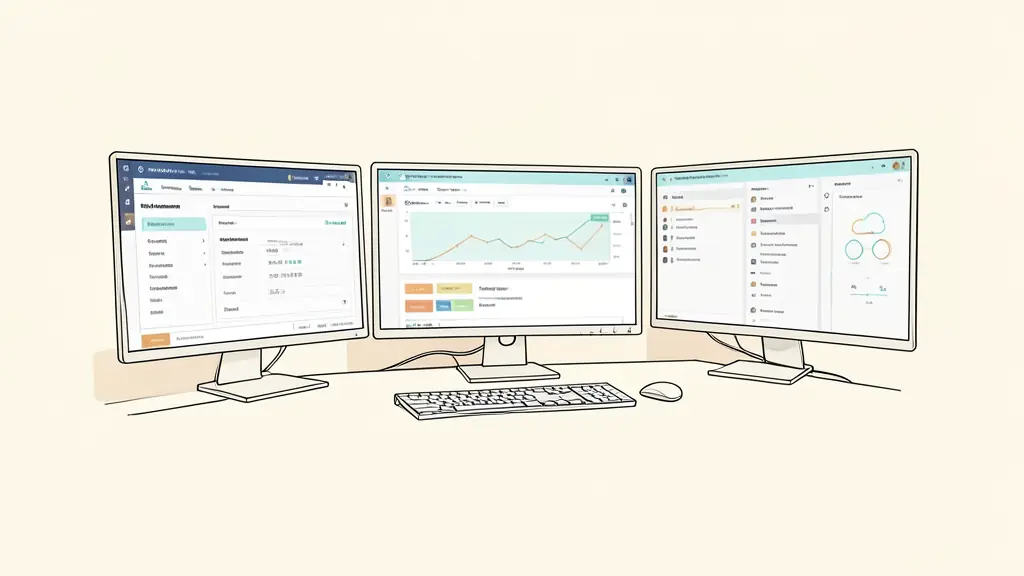
The right approach is not to ask if a trade copier can increase profits, but whether the current infrastructure can sustain the risk of automated replication. The best reflex is to prioritize rule adherence and latency audits over the speed of scaling.
Risk warning. Trading involves a risk of losing capital. Prop firm challenges are paid and passing them is not guaranteed. This content is for information only and is not investment advice.
Want to go further?
Leave your email and we'll let you know when a new article is out.