Trading SOP: The Definitive Guide to Procedural Discipline and the OTM Put Strategy
To master your trading SOP, define your operational goals, build a multi-layer validation checklist, and distinguish between procedural rules and options strategies.

A trading SOP is a repeatable operating system for decision-making, designed to replace emotional impulses with a rigorous, documented process. While no checklist can eliminate market risk or guarantee a win rate, it ensures that every entry and exit follows a predefined logic. Traders should audit their current execution consistency to identify where emotional variance occurs before implementing a formal procedure.
What a Trading SOP Really Covers
A Standard Operating Procedure is a set of step-by-step instructions compiled by an organization or individual to help workers carry out complex routine operations. In the context of a trading sop, this translates to a decision-support tool that removes the guesswork from the charts. For a personal trader, it is a mechanism for discipline; for a trading company, it is the foundation of scalability and onboarding.
Beyond operational workflows, the term is often used to describe a specific options strategy, such as selling OTM puts to generate income. Whether applied as a behavioral framework or a technical strategy, the core objective remains the same: the reduction of emotional variance. By utilizing a trading checklist, the operator shifts focus from predicting the market to executing a validated process.
How a Procedural Trading SOP Operates
Transforming a vague strategy into a repeatable process requires three distinct layers of validation. Without these filters, a trader is prone to FOMO-based entries or incorrect position sizing. This structured approach is similar to a professional forex trading framework where every action is contingent on the previous step being validated.
Pre-trade setup validation
The first layer filters the universe of assets to find high-probability setups. This involves verifying a CANSLIM-style setup or Stage Analysis to ensure the stock is in an uptrend. The trader must confirm a valid chart pattern, such as a Cup and Handle or Double Bottom, and identify a precise pivot point. Furthermore, the setup is rejected if an earnings announcement is scheduled within more than 3 days, as these events introduce unpredictable volatility.
Order execution and volume
Once a setup is validated, the execution layer governs the entry. A breakout is only valid if the price closes above the pivot with strong volume confirmation. This prevents late entries into exhausted moves. If the trader is Selling OTM Put options as part of this phase, they must verify that the current price remains comfortably above the chosen strike price to maintain a safety margin.
Risk management and stop-loss definition
The final layer focuses on capital preservation before the trade is live. This includes:
1. Defining a hard stop loss based on technical pivots.
2. Calculating the position size relative to the account’s total risk.
3. Verifying the risk-reward ratio meets the minimum threshold.
4. Recording the planned exit targets in a trade journal.
The Real Benefits and Inherent Limits of a Trading SOP
A rigorous SOP eliminates the “hope” factor from trading. By forcing a binary pass/fail decision on every setup, it prevents impulsive entries and reduces the mental fatigue associated with constant decision-making. When a trader adheres to a strict trading risk management protocol, they stop viewing individual trades as wins or losses and start viewing them as data points in a larger statistical expectancy.
However, a procedural checklist is a support tool, not a signal generator. It cannot find trades; it can only filter them. There is also a danger in blind adherence during black swan events. In extreme market crashes, a rigid SOP might suggest holding a position based on a historical pivot that is no longer relevant. The goal is to achieve discipline, not to become a mindless automaton that ignores obvious structural shifts in the market.
Comparing Procedural SOPs and the SOP Options Strategy
It is necessary to distinguish between the operational process (the checklist) and the “SOP” options strategy. The latter is a technical approach focused on premium collection. By selling Out of the Money (OTM) puts, a trader collects an option premium, betting that the stock will stay above the strike price. If the stock remains above that price until the expiration date, the trader keeps the premium.
If the stock price drops below the strike, the trader faces assignment, meaning they must buy 100 shares per put options contract at the strike price. To mitigate this, traders often use a cash-secured put, where the full amount to purchase the shares is held in reserve (for example, USD 18,000 for a strike of USD 180). This can evolve into the Wheel Strategy, where the trader alternates between selling puts and selling covered calls.
The following table contrasts the two meanings of SOP to clarify the trade execution workflow.
| Feature | Procedural SOP | SOP Options Strategy |
|---|---|---|
| Primary Goal | Execution Consistency | Income Generation |
| Core Mechanic | Pass/Fail Checklist | Premium Collection |
| Key Risk | Process Deviation | Assignment Risk |
| Tool Used | Notion / ClickUp / TV | Options Chain / Broker |
This comparison shows that while the procedural SOP manages the trader’s behavior, the options SOP manages the capital’s exposure.
Who This Structured Model Suits Best
A procedural SOP is most beneficial for discretionary traders who struggle with consistency and prop firm aspirants who must adhere to strict drawdown limits. By removing the emotional component, they can scale their accounts without increasing their stress levels. Conversely, systematic traders use SOPs to audit their algorithms and ensure that the execution matches the backtested logic.
For implementation, the choice of tool depends on the complexity of the workflow. TradingView is ideal for on-chart checklists and pivot validation. Notion is better suited for maintaining a comprehensive trade journal and a library of chart patterns. ClickUp is the preferred choice for trading teams, as it allows for custom statuses, dependencies, and the assignment of specific roles to ensure governance and accountability.
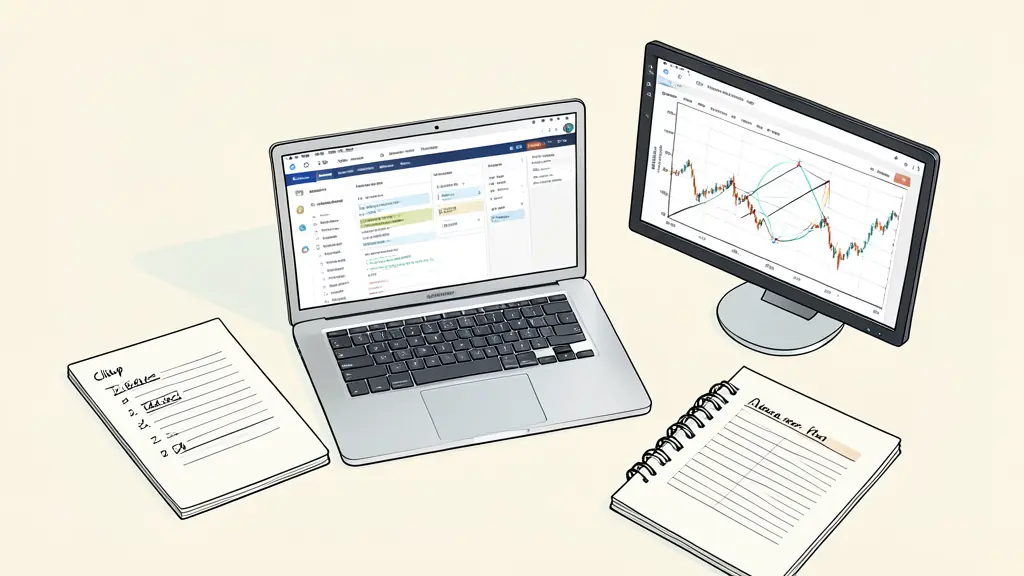
Developing a high level of trading discipline requires a system that is restrictive enough to prevent errors but flexible enough to allow for manual overrides during extreme volatility.
The right reflex is not to ask “Will this trade work?” but “Does this trade meet every single requirement of my process?”
This article does not replace advice from a qualified professional: consult a specialist about your own situation.
Risk warning. Trading involves a risk of losing capital. Prop firm challenges are paid and passing them is not guaranteed. This content is for information only and is not investment advice.
Want to go further?
Leave your email and we'll let you know when a new article is out.