Best Futures Prop Firms: A Comparative Audit of Payouts and Rules
An expert comparison of the top futures prop firms, auditing payout structures, drawdown limits, and US legality to help you scale your capital.

Selecting the right futures prop firm requires moving past marketing slogans to audit the actual usable risk and payout structures. This comparative analysis breaks down the leading providers to identify which firms offer the most sustainable path to funding based on drawdown mechanics and capital ceilings.
No time to read?
- Highest Payouts: Identify firms with the most aggressive profit splits for experienced traders.
- Lowest Barrier: Firms with the most accessible entry costs for beginners.
- Risk Warning: The critical difference between trailing and static drawdowns.
- US Compliance: Verification of legality for US-based traders.
The Top Futures Prop Firms Comparison Matrix
When auditing the best futures prop firms, the primary differentiator is not the nominal account size, but the relationship between the entry cost and the reward share. While many firms offer massive capital ceilings, the actual risk exposure is governed by the drawdown limit.
To successfully navigate a futures funding challenge, you must balance the cost of the evaluation against the profit split offered once you reach the funded tier.
| Firm | Entry Cost (Start) | Max Capital Ceiling | Profit Split / Reward Share | Evaluation Model |
|---|---|---|---|---|
| TopStep | $49 – $325 | $300,000 | Up to 90% | Evaluation Model |
| Apex Trader Funding | $35 – $99 | $300,000 | Up to 90% | Rapid Challenge |
| MyFundedFutures | $79 – $300 | $250,000 | Up to 100% (First $8k) | One-step evaluation |
| Take Profit Trader | $150+ | $200,000 | Up to 90% | Evaluation Model |
Verdict: Apex Trader Funding leads in lowest entry barriers, while MyFundedFutures offers the most aggressive early reward share (100% on the first $8,000, then 95%).
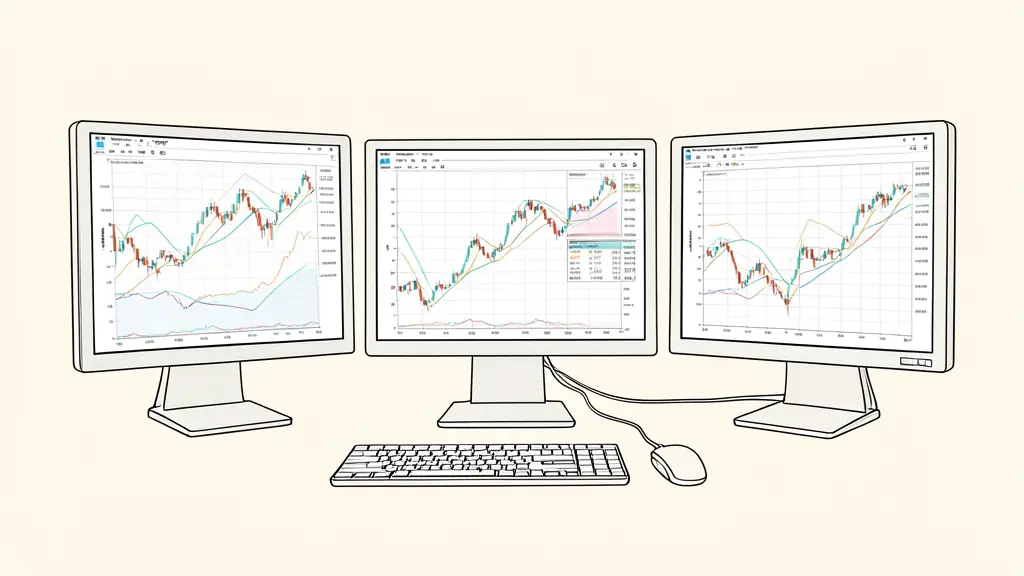
Understanding the Futures Funding Model
Futures prop trading operates on a fundamentally different architecture than FX. Instead of dealing with decentralized brokers, traders gain access to centralized exchanges like the CME Globex. This ensures real exchange depth and standardized price discovery, but it introduces specific constraints regarding session hours and maintenance breaks.
The pipeline typically follows a strict sequence:
1. Evaluation Phase: A simulated environment where you must hit a profit target without breaching the max drawdown. This can be a one-step evaluation or a more intensive rapid challenge.
2. Funded Account: Once the target is met, you move to a funded tier. Despite the “funded” label, these are often still simulated accounts where the firm pays out based on your performance (the reward share).
CME prop trading requires strict adherence to contract limits. Depending on your account size, you may be restricted to micro contracts or full-sized contracts to prevent catastrophic loss. For a deeper dive into the technicalities, you can explore how futures funding and rules work to understand the relationship between leverage and risk.
Connectivity is handled through specialized data feeds. Most firms utilize Rithmic or Tradovate for execution, with compatibility extending to platforms like NinjaTrader, Quantower, or Bookmap.
The Critical Rule Audit: Drawdowns and Contract Limits
The gap between a trader’s skill and their funding success is usually found in the drawdown rules. Many traders fail not because of a poor strategy, but because they misunderstand the difference between trailing drawdown vs static.
- Trailing Drawdown: The most aggressive risk cap. The drawdown limit moves up in real-time as your account equity increases. If you are in a winning trade and the price retraces, your drawdown limit remains at the highest equity point reached, effectively narrowing your “breathing room.”
- Static Drawdown: A fixed floor. The drawdown limit stays at a specific price point regardless of profit gains, allowing the trader more room to navigate volatility.
Beyond drawdown, contract limits act as a hidden risk cap. A firm might offer a $300,000 account, but if the contract limit is set to 15 or 25 contracts, your ability to scale is capped by the firm’s risk appetite, not your account balance.
Before committing capital, perform these essential checks before you pay for a futures challenge:
* Verify if the drawdown is calculated based on “end-of-day” or “intra-day” equity.
* Confirm if there is a consistency rule (preventing one “lucky” trade from passing the evaluation).
* Check for news trading restrictions that could lead to immediate account failure.
* Identify if there are monthly fees or activation fees hidden in the fine print.
Individual Firm Breakdowns: Strengths and Trade-offs
Each provider caters to a different risk profile. Obtaining a funded futures account requires matching your trading style to the firm’s specific constraints.
TopStep
* Target Audience: Disciplined traders seeking a structured environment.
* Value Proposition: Highly established with a strong reputation for reliability.
* Red Flags: Stricter consistency requirements than discount providers.
Apex Trader Funding
* Target Audience: High-volume traders and those starting with low capital.
* Value Proposition: Extremely low entry costs and frequent discount cycles.
* Red Flags: Trailing drawdowns can be brutal for swing traders; high failure rates due to aggressive risk caps.
MyFundedFutures
* Target Audience: Traders prioritizing high initial payouts.
* Value Proposition: One-step evaluation model and an aggressive reward share (up to 100% on the first $8,000).
* Red Flags: Newer market presence compared to the industry veterans.
Take Profit Trader
* Target Audience: Professional traders who prefer a more “hands-on” funding approach.
* Value Proposition: Focus on capital efficiency and streamlined payout processes.
* Red Flags: Higher initial cost compared to the “rapid challenge” models.
US Legality and Regulatory Compliance
A common concern for traders is the US prop firm legality. Proprietary trading is legal in the United States because the firms are not managing external client funds; rather, they are providing traders with the means to trade the firm’s own capital (or simulated versions of it).
The industry is shaped by overarching financial regulations designed to prevent systemic risk and market manipulation.
The Dodd-Frank Wall Street Reform and Consumer Protection Act and the Volcker Rule, emerging from the 2008 financial crisis, significantly altered how banks and proprietary trading firms operate.
To remain compliant, reputable futures prop firms ensure they do not act as unregistered broker-dealers. They often operate through a model where the trader is a “contractor” or “independent evaluator,” ensuring that the funding process does not violate CFTC registration requirements. When choosing a firm, verify if they provide clear documentation regarding their regulatory standing to avoid “scammy” operations that ignore these legal frameworks.
Decision Framework: Matching Your Profile to the Right Firm
Choosing a firm based on the “highest capital” is a mistake. You must choose based on your specific execution style and risk tolerance.
- The Scalper (High Frequency): Prioritize firms with low latency connectivity (Rithmic/Tradovate) and high contract limits. Apex or TopStep are often preferred due to their infrastructure and rapid challenge options.
- The Swing Trader (Position Holder): Avoid trailing drawdowns at all costs. Seek firms offering static drawdown or “end-of-day” calculations to avoid being stopped out by intra-day volatility.
- The Capital-Constrained Beginner: Start with the lowest entry barrier (e.g., $35 – $79 range) to learn the mechanics of the evaluation model without significant financial stress.
- The Professional Scaler: Look for firms with the highest capital ceilings ($300,000+) and scaling plans that allow you to increase your contract limits as you prove profitability.
Final Purchase Checklist:
* Confirm “No Time Limits” claims to reduce psychological pressure.
* Verify if there are “No Activation Fees” after passing the challenge.
* Check for a 14-day free trial or similar low-risk entry point.
* Confirm the payout frequency (e.g., every 14 or 30 days).
This content is for informational purposes only and does not constitute financial, legal, or professional advice. It is not a substitute for a professional consultation.
This article does not replace advice from a qualified professional: consult a specialist about your own situation.
FAQ
How do contract limits affect my risk?
Contract limits restrict the maximum number of positions you can hold simultaneously. This prevents over-leveraging but can limit profit potential during high-conviction setups.
What is the difference between trailing and static drawdown?
Static drawdown is a fixed limit based on the starting balance, while trailing drawdown moves up as your account equity increases, potentially tightening your risk room.
When should I choose a futures prop firm over a multi-asset firm?
Choose a dedicated futures firm if you require direct CME market access, centralized exchange pricing, and a focus on regulated futures contracts rather than CFDs.
Want to go further?
Leave your email and we'll let you know when a new article is out.