Charles Schwab or Fidelity: The Full Brokerage Audit and Persona-Based Verdict
To choose between Charles Schwab or Fidelity, analyze their core service models, compare asset access and fees, and match their tools to your trading profile.
Choosing between charles schwab or fidelity depends entirely on whether you prioritize passive wealth accumulation or active trading execution. While both are low-cost giants, ignoring the disparities in cash yield and technical tooling can cost you thousands in missed interest or inefficient trades. Audit your specific asset requirements and risk tolerance before opening an account to ensure your capital is positioned for maximum efficiency.
What Charles Schwab or Fidelity Truly Offer
Both firms operate as discount brokers providing a comprehensive suite of investment tools, yet they serve distinct psychological profiles. Fidelity positions itself as a stability engine, attracting those focused on long-term retirement and low-cost index funds. In contrast, Schwab integrates professional-grade banking and active trading tools, appealing to users who treat the market as a full-time business.
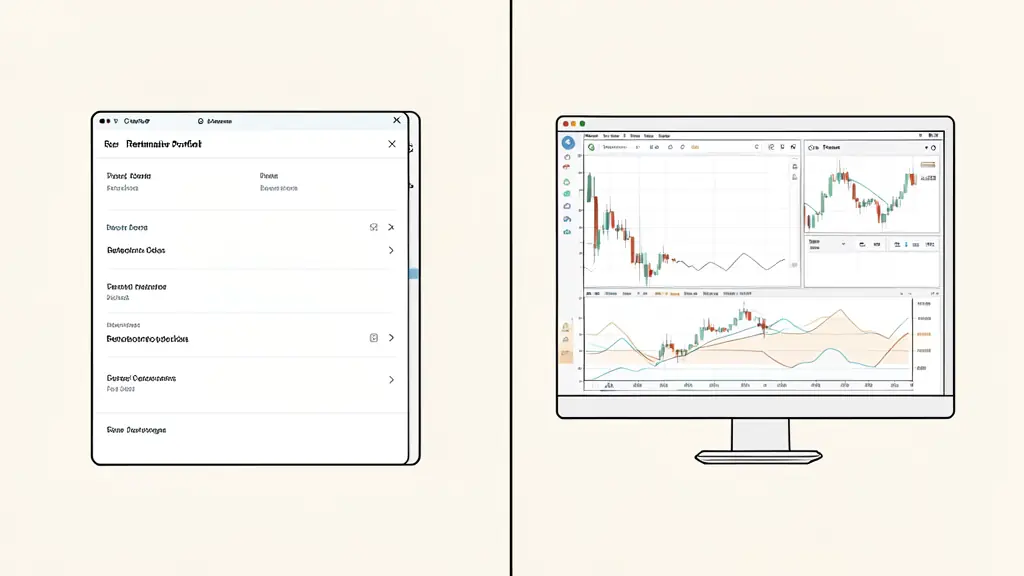
The divergence becomes clear when comparing the technical capabilities of the platforms. For the high-frequency trader, the battle is essentially thinkorswim vs Fidelity, where the former offers a level of charting sophistication and order customization that the latter’s standard interface cannot match. While Fidelity provides the reliability required for massive portfolio management, Schwab offers the agility needed for complex market maneuvers.
The Operational Logic: How Each Brokerage Functions
The structural difference lies in how each firm manages the relationship between your trading capital and your idle cash. Fidelity focuses on a seamless, low-cost ecosystem designed to minimize friction for the long-term saver. Schwab operates as a full-scale financial hub, merging a brokerage account with integrated banking services to support a wider array of derivative instruments.
Fidelity’s Low-Cost Ecosystem
Fidelity optimizes for cost efficiency, most notably through its proprietary zero-expense ratio funds. These allow investors to enter the market without the drag of management fees. Additionally, Fidelity has expanded into the modern era by offering direct crypto trading and custody, allowing users to hold digital assets alongside their traditional stocks and bonds. A critical component of their model is the brokerage cash yield, where uninvested cash is often placed into a money-market fund like SPAXX to generate competitive returns.
Schwab’s Active Trading Infrastructure
Schwab is built for the technician. Through the integration of thinkorswim, the platform provides professional-grade access to futures contracts, futures options, and forex. This infrastructure is designed for traders who utilize complex order types, such as one-cancels-other (OCO) or one-triggers-other (OTO). While Schwab also offers a brokerage cash yield, its default sweep logic is typically lower than Fidelity’s, reflecting a system designed for capital that is actively deployed rather than sitting idle.
Real Advantages and Critical Limits of the Two Models
Fidelity’s primary advantage is its aggressive approach to cost reduction and cash management. By offering zero expense ratio funds, they remove the entry barrier for passive investors. Furthermore, their treatment of uninvested cash is a major differentiator, as they allow users to earn significantly higher interest on idle balances compared to Schwab’s standard sweep, which often yields minimal returns.
Schwab’s edge is found in its research volume and technical execution. The platform provides deeper analytics and a more robust set of charting tools for those analyzing volatility or price action. However, the limit of the Schwab model is the cost of inertia; keeping large sums of cash in a brokerage account without manually moving it into a higher-yield vehicle can result in missed earnings. Fidelity’s limit is less about cost and more about the technical ceiling for advanced derivatives, where Schwab’s futures and forex integration is more comprehensive.
Comparing Fees, Asset Access, and Platform Costs
Both brokers have eliminated the most common barriers to entry, such as account minimums and online stock commissions. However, costs diverge when moving into specialized contracts or assisted services. Options trading is priced identically at $0.65 per contract, but mutual fund transaction fees can vary, with both firms offering a wide selection of no-transaction-fee (NTF) mutual funds to avoid the typical $49.95 or $74.95 charges.
The impact of these costs is felt most in how you manage funded trading accounts. Fidelity offers a more accessible entry for small-scale investors with fractional shares starting at $1, whereas Schwab’s “stock slices” typically require a $5 minimum. For those seeking automated management, Fidelity Go starts at $10, while Schwab Intelligent Portfolios requires $5,000.
Fidelity cash yield reaches up to 3.3% through SPAXX, according to U.S. News.
| Feature | Fidelity | Charles Schwab |
|---|---|---|
| Account Minimum | $0 | $0 |
| Stock/ETF Commission | $0 | $0 |
| Options Fee | $0.65/contract | $0.65/contract |
| Cash Yield (Default) | Up to 3.3% (SPAXX) | 0.01% to 0.05% |
| Fractional Min. | $1 | $5 (slices) |
| Assets | Stocks, ETFs, Crypto | Stocks, ETFs, Futures, Forex |
This data reveals a clear trade-off: Fidelity is the superior choice for capital preservation and low-cost entry, while Schwab is the powerhouse for asset variety and professional execution.
The Suitability Audit: Which Broker Fits Your Trading Profile?
Selecting a broker is not about finding the “best” firm, but the one whose operational logic matches your trading frequency and asset preference. The wrong choice can lead to inefficient cash drag or a lack of necessary technical tools.
The Passive Investor & Retirement Saver
For those focusing on Traditional IRAs, Roth IRAs, or 529 plans, Fidelity is the logical choice. The combination of zero-expense ratio index funds and a high-yield cash sweep makes it an ideal environment for long-term compounding. The simplicity of the interface reduces the risk of over-trading, keeping the focus on retirement goals.
The Active Trader & Options Specialist
Traders who require advanced active trading platforms should gravitate toward Schwab. The thinkorswim ecosystem, including the PaperMoney simulator for risk-free practice, provides the necessary tools for analyzing options Greeks and managing futures. The ability to execute complex OCO and OTO orders ensures that risk is managed with precision.
The Cash-Heavy & Crypto-Curious Investor
If you maintain a significant cash buffer while waiting for market entries, Fidelity’s SPAXX integration provides a distinct advantage in yield. Additionally, the inclusion of direct crypto trading allows these investors to diversify into digital assets without leaving their primary brokerage ecosystem.
The right move is not to ask which broker is better, but which one aligns with your specific capital behavior.
Risk warning. Trading involves a risk of losing capital. Prop firm challenges are paid and passing them is not guaranteed. This content is for information only and is not investment advice.
Want to go further?
Leave your email and we'll let you know when a new article is out.