Octa Forex Ratings: Trust Score, Regulatory Audit and Trading Costs
To evaluate Octa, analyze its trust score, audit its regional regulation, compare trading costs, and verify platform performance before opening an account.

Octa can look attractive due to its massive social presence and commission-free marketing, but a deeper look at octa forex ratings reveals a fragmented operational reality. While its Trust Score suggests reliability, the actual level of investor protection depends entirely on which regional entity manages your account. Traders must audit their specific jurisdiction and the associated fee structures before depositing capital to avoid unexpected regulatory gaps.
What Octa Forex Ratings and Trust Scores Truly Reveal
The gap between marketing sentiment and professional audits is wide. On the surface, official review ratings range from 4.0 to 4.6, reflecting a positive perception among the general user base. However, these numbers often stem from unverified user sentiment, which tends to prioritize ease of onboarding over long-term regulatory security.
The Proprietary Trust Score Logic / User Sentiment vs. Expert Audits
To get a more objective view, we look at the Octa Trust Score, which stands at 73 out of 99. This score is derived from an audit of more than 100 variables by the ForexBrokers.com research team, who track over 100 international regulatory agencies. Unlike a simple star rating, this metric accounts for corporate transparency, regulatory tiering, and historical reliability.
74–89% of retail investor accounts lose money rapidly when trading CFDs with the provider, according to the risk disclosure.
The disparity between a 73/99 expert score and high user ratings highlights a common industry trend: beginners often rate brokers based on the interface and initial deposits, while analysts focus on the risk of capital loss and the strength of the legal framework.
The Operational Logic: How Octa’s Regulatory Structure Works
Octa does not operate as a single global entity but through a fragmented regional model. This means the safety of your funds is not uniform; it is dictated by the specific office that authorizes your account. This structure allows the broker to offer different leverage and account types depending on where the client is located.
Tiered Regulation by Region / Investor Protection Realities
The Octa regulation framework is split into tiers. The most secure is the Tier-1 authorization, which covers the European Union through the MiFID passporting system via a Cyprus entity. This provides the highest level of retail investor protection. In contrast, other regions are managed by Tier-2, Tier-4, or offshore entities, which offer significantly fewer legal safeguards.
This tiered approach means that a trader in the EU has access to segregated funds and strict oversight, while a trader under an offshore entity relies more on the broker’s internal policies. Understanding which entity you are signed with is the only way to accurately assess your risk of capital loss.
Trading Conditions: Real Advantages and Critical Limits
Octa markets itself on a “zero commission” model, but the cost of trading is simply shifted. Instead of a flat fee per trade, the cost is embedded in the spread. While this simplifies the cost structure for beginners, professional traders must analyze the average spread to determine the actual cost of execution.
Spread Analysis and Execution Quality
Execution quality varies by entity. For the EU entity, the average EUR/USD spread is 0.5 pips, whereas foreign entities see a higher average of 0.9 pips. Some users report spreads starting from 0.6 or 0.7 pips, but these are often floating and subject to market volatility.
97.5% of executed orders reportedly have no slippage.
While the claim of nearly zero slippage is impressive, it is important to note that the provided spread data often lacks a specific date range, making it difficult to verify consistency across different market cycles.
The Truth About Commission-Free Trading
The absence of commissions, inactivity fees, and withdrawal fees makes Octa trading fees look competitive on paper. However, the lack of a fixed commission means the broker relies entirely on the spread for revenue. For high-frequency traders or those using complex Expert Advisors, these slightly wider spreads on foreign accounts can erode profitability over thousands of trades.
Comparing Platforms, Asset Range, and Copy Trading
The technical offering is split between industry-standard software and proprietary tools. While MetaTrader 4 (MT4) and MetaTrader 5 (MT5) remain the core for technical analysis, the OctaTrader platform is designed for a more streamlined, mobile-first experience.
Proprietary Apps vs. MetaTrader
OctaTrader includes a Vision module and beta AI-powered performance analytics to help traders optimize their entries. However, it has limitations: users have reported a maximum open-position limit of 50 lots and a total absence of Expert Advisors on this specific platform. In contrast, the MT4 and MT5 versions allow for full automation and advanced technical analysis.
| Platform | Account Types | Key Feature | Target User |
|---|---|---|---|
| MT4 / MT5 | Standard / Pro | Expert Advisors | Professional |
| OctaTrader | Integrated | AI Analytics (Beta) | Beginner |
| Copytrading | Master-based | Risk Scores | Passive Investor |
The Octa copy trading Ecosystem
The copy trading system allows users to follow “Master Traders” across different skill levels, from “Newcomers” to “Legends.” The interface provides risk scores and minimum-expertise filters to help users select a provider. However, the system is limited by the fact that past performance does not guarantee future returns, and sorting options for comparing Masters remain basic.
Regarding the asset range, Octa offers 257 tradeable instruments. This is a critical limitation when compared to industry leaders like Saxo, IG, or CMC Markets, which offer more than 10,000 instruments. Furthermore, cryptocurrency access is provided via CFDs rather than ownership of the underlying asset.
The Suitability Audit: Who Should Trade With Octa?
Determining the reliability of a broker requires looking past the marketing and into the withdrawal history. User experiences are mixed: some report withdrawal processing times of 4 hours or less, while others have complained about waiting 8 days without a response for amounts as high as 35,000 USD.
Withdrawal Performance Analysis
When searching for Octa withdrawal proof, it is clear that the experience varies by region and payment method. With over 50 payment options, including local bank transfers and crypto-based deposits, the infrastructure is robust. However, the inconsistency in response times suggests that during high-volume periods, the support system can struggle to keep pace with withdrawal requests.
Final Verdict by Trader Profile
Octa is a strong fit for beginners who value a low barrier to entry, commission-free structures, and the ability to follow Master Traders. The integrated educational resources, including an economic calendar and Autochartist, provide a solid foundation for those learning fundamental analysis.
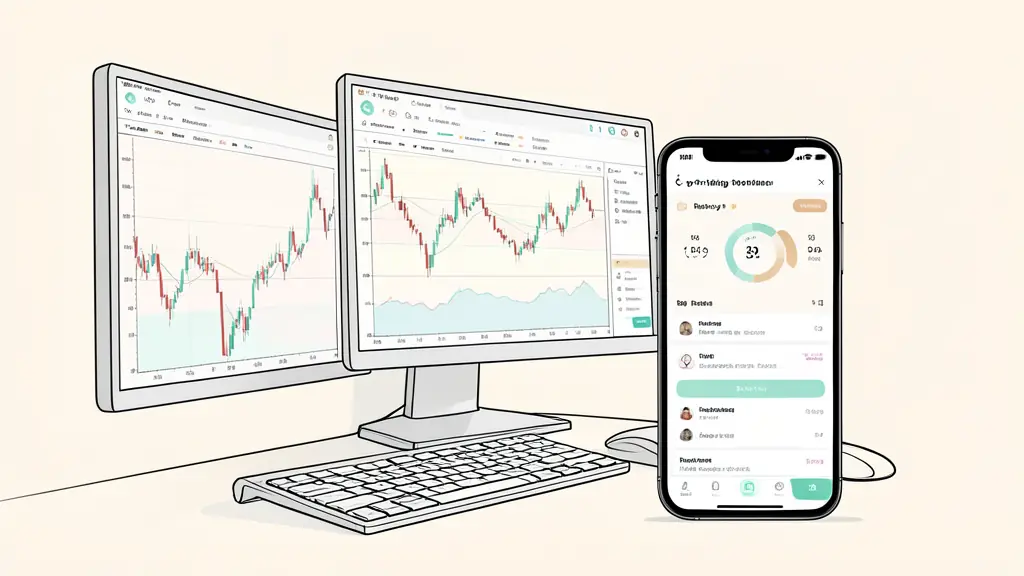
For professional traders, the limited instrument range and the lack of Expert Advisor support on the proprietary platform are significant drawbacks. Those scaling multi-asset portfolios will likely find the 257-instrument limit too restrictive compared to Tier-1 institutional brokers.
The right move is not to ask if a broker is “the best,” but whether its specific regulatory entity and asset range align with your risk tolerance and trading objectives.
Risk warning. Trading involves a risk of losing capital. Prop firm challenges are paid and passing them is not guaranteed. This content is for information only and is not investment advice.
Want to go further?
Leave your email and we'll let you know when a new article is out.