Lucid Prop Firm Review: The Funding Process, Drawdown Rules and Legitimacy Audit
To evaluate Lucid Prop Firm, analyze its legitimacy, audit the evaluation rules, compare the payout structures, and verify the suitability for your strategy.

This lucid prop firm review provides a direct verdict on whether the company is a legitimate gateway to funded trading or a complex rule trap. While its funding models appear competitive, the immediate distinction lies in how its drawdown limits compare to industry standards. Traders must audit the payout proof and verify specific risk constraints before committing any registration capital.
What Lucid Prop Firm Truly Covers
Lucid Prop Firm can look attractive because it promises high capital allocation to traders who can prove their consistency. But the reality of any funding model depends on the transparency of its payout engine and the rigidity of its risk parameters. To understand the full operating model of funded accounts, one must look beyond the marketing promises of high profit splits.
The Legitimacy Verdict / Market Positioning
Lucid positions itself as a scalable partner for retail traders, offering a path to professional capital without requiring personal deposits for trading. Legitimacy in this sector is measured by the consistency of payouts and the fairness of the funded trader evaluation. Based on available evidence, Lucid operates within the standard prop trading framework, though traders should always cross reference their Terms of Service with actual user payout history to confirm long term stability.
The firm targets traders who prioritize capital growth over low registration fees. By offering various account sizes, it attempts to capture both the novice trader and the experienced professional. However, the gap between passing an evaluation and receiving a consistent payout is where most traders fail, making a strict audit of the rules mandatory.
The Operational Logic: How the Lucid Funding Process Works
The path to becoming a funded trader follows a structured sequence designed to filter out gamblers and reward disciplined risk managers. The process starts with a selection of account sizes, each with a corresponding registration fee. Once the account is active, the trader enters a testing phase where specific performance targets must be met without violating risk limits.
Evaluation Phase Requirements
To pass the initial stage, traders must reach a predefined profit target. This phase tests the ability to maintain a positive equity curve while adhering to prop firm drawdown rules. Failure to stay within the daily or total loss limits results in an immediate account breach, requiring the trader to start over or purchase a new challenge.
- Selection of the account tier based on desired Trading Capital.
- Completion of the Evaluation Challenge by hitting the profit target.
- Passing the Verification phase to prove the initial success was not a fluke.
- Transition to a Funded Account after a final compliance check.
- Regular payout requests based on the achieved Profit Split.
Verification and Funding Steps
The verification phase often mirrors the evaluation but typically requires a lower profit target. This step is designed to ensure the trader is not over-leveraging to hit a single target. Once both phases are completed, the trader is granted access to a funded account, moving from a simulated environment to one where they can earn a share of the profits generated from the firm’s capital.
Real Trading Advantages and Critical Rule Limits
Trading with Lucid offers the advantage of amplified buying power, but this comes with strict operational boundaries. The primary friction point for most traders is the interaction between the daily drawdown and the maximum total drawdown. If a trader hits either limit, the account is closed, regardless of whether the overall equity is still positive.
Drawdown Structure and Risk Constraints
Lucid employs a dual-layer risk system. The daily drawdown prevents catastrophic single-day losses, while the total drawdown protects the firm’s overall capital. Traders must calculate their lot sizes based on the most restrictive of these two limits to avoid accidental liquidation. A common mistake is focusing only on the total drawdown and ignoring the daily cap, which often triggers failures during high volatility events.
The Lucid profit split is designed to incentivize long term growth. While the percentage of profits kept by the trader is competitive, it is only realized if the trader remains compliant with all risk management protocols. Any breach of the rules, even if the account is in profit, can lead to the forfeiture of the funded status.
Platform Compatibility and Asset Access
The firm supports a variety of assets, including FX and CFDs, allowing traders to diversify their strategies. The integration with standard trading platforms ensures that technical analysis tools and automated scripts can be used, provided they do not violate the firm’s prohibited trading strategies (such as high-frequency arbitrage or certain types of hedging).
Comparing Lucid Prop Firm Review Data, Costs, and Payouts
When analyzing the cost of entry, traders must weigh the registration fee against the potential for scaling. The value proposition changes depending on the account size, as larger accounts offer more Trading Capital but come with higher absolute drawdown limits that require more sophisticated risk management.
To determine the best fit, traders should analyze how to compare prop firm payouts to see where Lucid stands against other industry leaders. The following table breaks down the core operational data for the most common account tiers.
| Account Tier | Reg Fee | Profit Split | trading platform support |
|---|---|---|---|
| Starter | Low | 70% to 80% | MetaTrader / cTrader |
| Professional | Medium | 80% to 90% | MetaTrader / cTrader |
| Elite | High | Up to 90% | MetaTrader / cTrader |
The data shows a clear correlation between the initial investment and the percentage of profits the trader retains. While the Elite tier offers the highest split, it also carries the highest risk of loss in terms of the registration fee if the trader cannot manage the larger capital allocation.
The Suitability Audit: Who Should Trade With Lucid?
Lucid is not for every trader. It is specifically engineered for the disciplined risk manager who operates with a strict percentage-based loss limit per trade. Aggressive scalpers or those who rely on “all-in” strategies will likely find the daily drawdown limits too restrictive, leading to frequent account failures.
The ideal candidate for this model is a trader who has a proven edge and a trading journal showing a steady equity curve. If your strategy requires deep drawdowns to achieve high returns, this firm is a poor fit. However, for those who prioritize capital preservation and seek a professional environment to scale their earnings, Lucid provides a viable path.
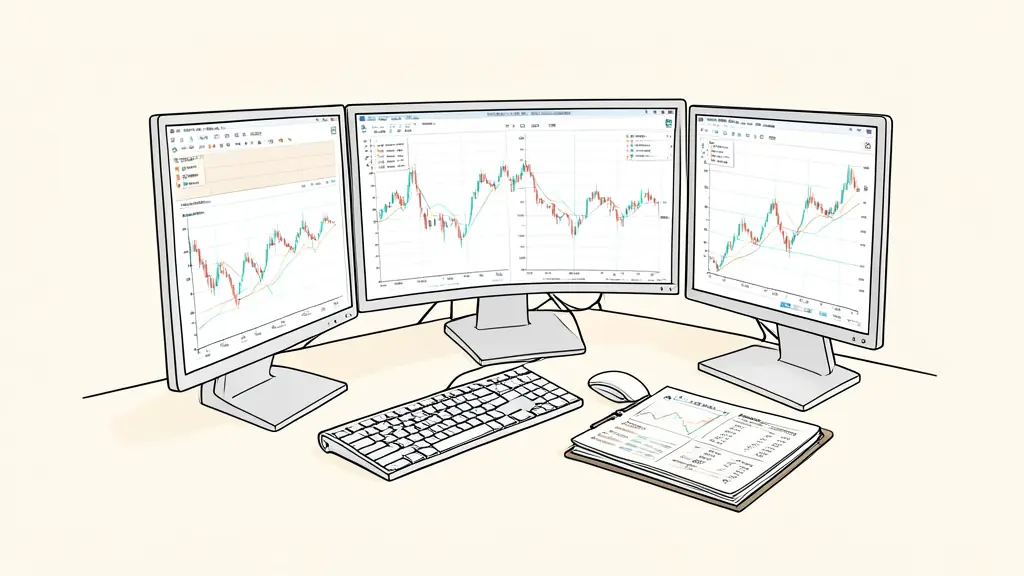
Before onboarding, traders must verify a final checklist of red flags: check for “consistency rules” that limit the size of any single winning trade, verify if news trading is restricted during high-impact events, and confirm the exact timeframe for payout processing.
The right reflex is not to ask if the capital is available, but whether your risk management is disciplined enough to keep it.
Risk warning. Trading involves a risk of losing capital. Prop firm challenges are paid and passing them is not guaranteed. This content is for information only and is not investment advice.
Want to go further?
Leave your email and we'll let you know when a new article is out.